Maslow's Hierarchy of Needs: The 5 Levels of Human Motivation
Famous model in psychology and helps us understand what motivates people.
Maslow's Hierarchy of Needs
Check-in
Before you push for performance or growth, check if the basics are in place. Are fundamental needs being met, or are you expecting motivation without stability? When results feel stuck, the issue is often not capability, but unmet needs at a lower level.
The Maslow Demand Level Model, also known as Maslow's Hierarchy of Needs, is a psychological theory created by Abraham Maslow in 1943. It is one of the most famous models in psychology and helps us understand what motivates people.
Maslow created this model while working as a psychologist. He wanted to understand what drives people beyond just basic survival. He studied successful people like Albert Einstein and used ideas from humanistic psychology, which focuses on personal growth and reaching one's potential.
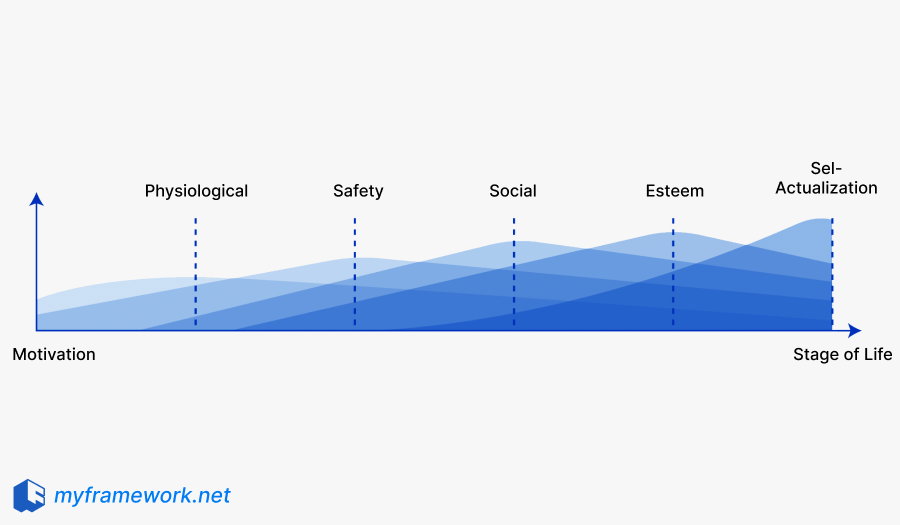
The model shows a pyramid of human needs, starting with the most basic needs and moving up to higher-level needs, ending with self-fulfillment.
Core Concept: The Hierarchy of Human Needs
The main idea of Maslow's model is that human needs are structured like a pyramid, with lower-level needs needing to be met before higher-level needs can be focused on. The hierarchy has five levels:
- Physiological Needs: Basic needs like food, water, sleep, and shelter.
- Safety Needs: Feeling safe, having financial security, and stability.
- Social Needs: The need for love, belonging, friendships, and social connections.
- Esteem Needs: Respect from others, self-esteem, recognition, and achievement.
- Self-Actualization Needs: The desire to reach one's full potential, personal growth, and fulfillment.
When to Use
- Employee Retention: When analyzing why high-performers are leaving (often a lack of Growth/Esteem, not just pay).
- User Persona Creation: To determine the deep emotional driver of your target customer.
- Classroom Management: Ensuring students feel safe and included before expecting them to learn complex topics.
- Personal Reflection: When you feel "stuck" in life, identified which bucket is empty.
Example
In team management, Maslow's model can help create an environment that meets different employee needs.
Basic Needs (Security)
Team members need to feel safe and secure in their roles. Provide clear expectations and a healthy team culture.
Belonging Needs (Community)
Team members need to feel a sense of connection and camaraderie. Promote open communication and regular team-building activities.
Esteem Needs (Recognition)
Team members need to feel valued, appreciated, and respected. Acknowledge individual and team wins. Offer constructive feedback. Some frameworks, such as Radical Candor, SBI Model, and COIN Model will help here.
Growth Needs (Development)
Team members need opportunities for personal and professional growth. Provide training programs & offer mentorship opportunities.
Self-Actualization (Purpose)
Team members need to feel a sense of purpose and creativity in their work. Encourage innovative projects & align team goals with personal values.
Practical Applications
Marketing
In marketing, Maslow's model helps understand what customers want. Marketers can design their messages to appeal to specific needs.
For example, ads that highlight safety features target people's safety needs, while luxury products focus on esteem needs by promising status and exclusivity.
Product Development
In product development, companies can use this model to decide which features to add. Basic features meet physiological needs, while security features meet safety needs. Social features, like sharing options, can meet social needs.
Key Takeaway
You cannot build a high-performance roof on a shaky foundation.
Whether you are managing a team or building a product, Maslow's Hierarchy reminds us that higher-level achievements (creativity, innovation) are nearly impossible if basic needs (security, belonging) are unmet. Address the basics first, and the potential will follow.
FAQ
What should a good Maslow's Hierarchy of Needs output look like?
A good result is a realistic diagnosis of the team’s current stage together with a clear view of what leadership should focus on next. The output should help explain what is happening in the team now, not just list the stages in theory.
When is Maslow's Hierarchy of Needs not the right tool?
It becomes less useful when people start treating the stages as a prediction tool or as a label to excuse poor performance. Maslow's Hierarchy of Needs helps interpret team dynamics, but it should not replace direct observation of what the team actually needs next.
Can Maslow's Hierarchy of Needs help with leadership?
Maslow's Hierarchy of Needs can help with leadership when the real question is whether the tension reflects a normal stage-of-development issue or a deeper team problem. It helps you read the conflict in context and choose a leadership response that fits the team’s current stage.