Stakeholder Saliency Model: Prioritizing Who Matters Most
Sharpen your stakeholder management skills via finding who matters most.
Stakeholder Saliency Model
Why Stakeholder Management Often Fails
In real-world projects, managers often face this dilemma: Too many stakeholders, not enough clarity.
Some stakeholders demand immediate action while others remain passive yet hold hidden power. Without a clear method, it's easy to waste resources or neglect critical voices.
Developed by Mitchell, Agle, and Wood, the Stakeholder Saliency Model provides a smart framework for identifying which stakeholders matter most and how to manage them efficiently.
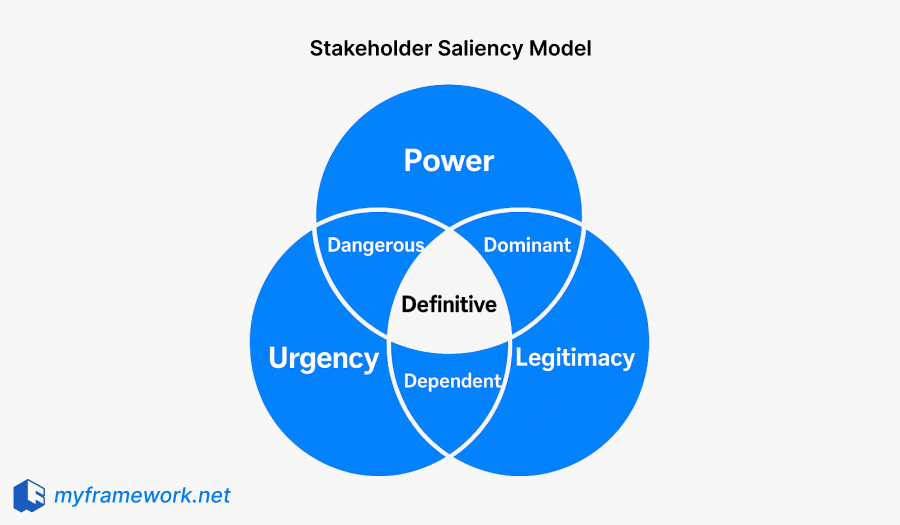
Three Simple Factors That Define Stakeholder Importance
The model says a stakeholder’s importance—or saliency—depends on three attributes:
Power
Their ability to influence the project: through authority, resources, or political strength.
Legitimacy
Whether their involvement is appropriate—are they officially part of the project, or do they have moral or legal standing?
Urgency
How time-sensitive or critical their needs are—do they demand immediate attention?
When to Use
- Project Governance: When you have many stakeholders and need a defensible way to prioritize attention and escalation.
- Crisis Triage: When urgent demands are coming from multiple directions and you need to identify “Definitive” stakeholders first.
- Role Clarification: When you want to convert stakeholder priority into execution roles, then assign RACI (A/C/I) intentionally.
Key Takeaway
Stakeholder management is not about making everyone happy—it is about making the right people happy.
Use the Saliency Model to filter the list, and use RACI to assign the work. This ensures you focus your limited energy on those who truly impact the outcome.
FAQ
What should a good Stakeholder Saliency Model output look like?
A good result is a realistic diagnosis of the team’s current stage together with a clear view of what leadership should focus on next. The output should help explain what is happening in the team now, not just list the stages in theory.
When is Stakeholder Saliency Model not the right tool?
It becomes less useful when people start treating the stages as a prediction tool or as a label to excuse poor performance. Stakeholder Saliency Model helps interpret team dynamics, but it should not replace direct observation of what the team actually needs next.
Can Stakeholder Saliency Model help with project governance?
Stakeholder Saliency Model can help with project governance when the real question is whether the tension reflects a normal stage-of-development issue or a deeper team problem. It helps you read the conflict in context and choose a leadership response that fits the team’s current stage.