Three Circles of Influence: Focus on What You Can Control
Grow your influence via focusing what you can control.
Three Circles of Influence
Feeling Overwhelmed Is Common
Have you ever felt overwhelmed by things outside your control? If so, you are not alone. Many people spend time worrying about problems they cannot change.
Stephen Covey, in his famous book The 7 Habits of Highly Effective People, introduced the Three Circles of Influence to help us focus on what truly matters.
This model teaches us how to direct our energy wisely to become more effective in life and work.
Understanding the Three Circles
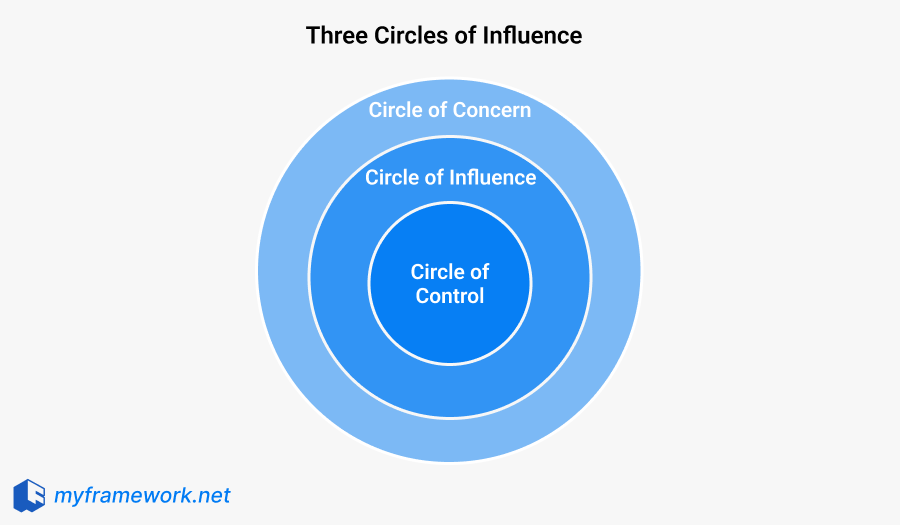
The model divides everything we care about into three circles:
- Circle of Concern
- Circle of Influence
- Circle of Control
Circle of Concern
This includes everything that affects us, such as the economy, global events, or other people's opinions. We may worry about these things, but we have little or no power to change them.
- The weather
- The past
- The economy
- The new/global events
Action: Let go of anything in this circle, it will not serve you.
Circle of Influence
This covers areas where we can make a difference, such as relationships, skills, and habits. We may not control everything here, but our actions can have an impact.
- Your friends
- Your family
- Your reputation
Action: Put your focus on the factors that you can influence the most.
Circle of Control
This is where we have full power. It includes our choices, mindset, and behaviors. By focusing on this circle, we can take meaningful action and influence the other circles over time.
- Your thoughts
- Your actions
- Your reactions
Action: Spend your energy and time improving what you can control.
The key insight from this model is that when we focus on what we can control, our influence grows. If we spend too much time on things we cannot change, we waste energy and feel frustrated.
When to Use
- High Stress/Anxiety: When you feel overwhelmed, list out your stressors and categorize them. If it's in the Circle of Concern, cross it out.
- Conflict Resolution: Instead of trying to control the other person (impossible), focus on your reaction and communication style (Control).
- Strategic Planning: Don't build a strategy based on market hope (Concern); build it based on product quality and customer service (Control/Influence).
- Feedback: When you receive criticism, don't dwell on the person's tone (Concern); focus on the truth in their words that you can improve (Control).
Key Takeaway
Your agency lies in the center. By relentlessly focusing on your own choices and attitude, you paradoxically gain more influence over the world around you.
FAQ
What should a good Three Circles of Influence output look like?
A good result is a routine or working method that is easier to repeat and produces a visible practical benefit such as clearer notes, steadier focus, or better recall. If the user cannot feel or observe the difference in practice, the method has not been applied well.
When is Three Circles of Influence not the right tool?
It is a weak fit when the problem requires a deeper system change, not just a better routine or technique. Three Circles of Influence can improve how the work is done, but it will not solve structural constraints, motivation issues, or conflicting priorities on its own.