VRIO Framework: The Litmus Test for Competitive Advantage
Evaluate whether your resources create real, defensible competitive advantage.
VRIO Framework
Quick Introduction
In today’s competitive business environment, companies constantly seek ways to stand out. But what truly sets a business apart?
Many struggle to identify which resources contribute to long-term success. This is why the VRIO Framework becomes essential.
Developed by Jay Barney in 1991, this framework provides a structured way to assess internal resources (it's also part of the Business Model Canvas, we could see how important it is.) and determine whether they can create a sustained competitive advantage.
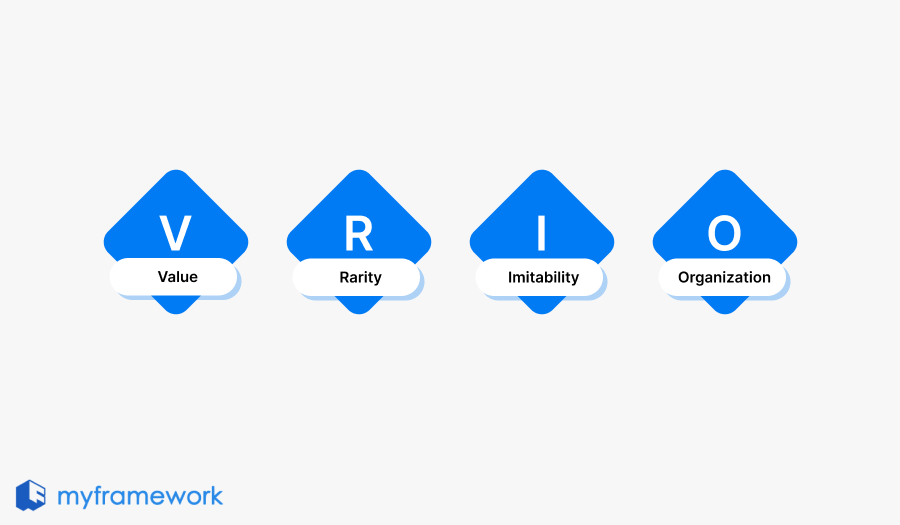
The VRIO Framework evaluates resources based on four key factors:
- Value
- Rarity
- Imitability
- Organization
Core Concept of the VRIO Model
Value
A resource must add value to the company; otherwise, it may not only fail to contribute to a competitive advantage but could even lead to a disadvantage.
Key questions to ask:
- Does this resource help the company respond to customer needs or market demands?
- Does it improve business performance, such as efficiency or profitability?
- Is this resource aligned with our business strategy and objectives?
- How does this resource contribute to solving current business challenges?
Rarity
A resource must be rare to provide an edge. If every competitor has access to it, it won’t create an advantage.
Key questions to ask:
- How many competitors possess this resource or capability?
- Is this resource difficult for others to acquire or replicate?
- How unique is this resource compared to what is available in the market?
- Would this resource provide a distinct advantage if it were not widely available?
Imitability
If a resource is easy to imitate, competitors can quickly catch up. The harder it is to copy, the stronger the advantage.
Key questions to ask:
- Can competitors easily imitate this resource or capability?
- What barriers exist that make it difficult for others to copy this resource (e.g., patents, unique skills, proprietary technology)?
- Are there factors (e.g., time, cost, complexity) that would make it challenging for others to replicate this resource?
- Is this resource tied to the company’s history, culture, or relationships, making it harder to imitate?
Organization
Even a valuable, rare, and hard-to-imitate resource won’t be useful if the company isn’t organized to exploit it fully.
Key questions to ask:
- Does the company have the right structure and systems in place to fully leverage this resource?
- Are there processes or policies that support the effective use of this resource?
- Does the company have the right skills, knowledge, and culture to maximize this resource’s potential?
- Is there a clear alignment between the resource and the organization’s strategic goals?
When to Use
- Strategic Planning: To decide which internal assets deserve the most investment. Don't pour money into "Parity" resources; invest in "Rare" and "Inimitable" ones.
- M&A Due Diligence: When buying a company, use VRIO to see if their "tech advantage" is actually sustainable or if it will be copied in 6 months.
- Internal Audit: To differentiate between what your marketing team says is an advantage versus what effectively is an advantage.
Key Takeaway
The VRIO framework delivers a humbling insight: most advantages are temporary.
What is rare today often becomes common tomorrow.
True sustainability usually lives in Imitability and Organization—culture, systems, and accumulated knowledge that competitors cannot simply buy.
Use VRIO not only to assess where you stand, but to decide which capabilities are worth defending and deepening.
FAQ
What should a good VRIO Framework output look like?
A good result is a realistic diagnosis of the team’s current stage together with a clear view of what leadership should focus on next. The output should help explain what is happening in the team now, not just list the stages in theory.
When is VRIO Framework not the right tool?
It becomes less useful when people start treating the stages as a prediction tool or as a label to excuse poor performance. VRIO Framework helps interpret team dynamics, but it should not replace direct observation of what the team actually needs next.
Can VRIO Framework help with m&a due diligence?
VRIO Framework can help with m&a due diligence when the real question is whether the tension reflects a normal stage-of-development issue or a deeper team problem. It helps you read the conflict in context and choose a leadership response that fits the team’s current stage.