Work Breakdown Structure (WBS): Turning Big Goals into Doable Steps
For better project planning, helps you simplify, organize, and get things done.
Work Breakdown Structure (WBS)
Why Do Projects Often Go Off Track?
Many teams start projects with excitement and ambition, and finally end up facing missed deadlines, unclear responsibilities, and budget overruns.
Despite some unexpected factors, in some cases, people realize that the work wasn't clearly defined from the beginning.
That’s where the Work Breakdown Structure (WBS) comes in. It much like factorization in math, breaking a project into smaller and smaller components — from overall project goals, to tasks, to daily individual actions — until nothing more can be divided.
WBS was developed by Dr. Harold Kerzner in his classic book “Project Management: A Systems Approach to Planning, Scheduling, and Controlling.”
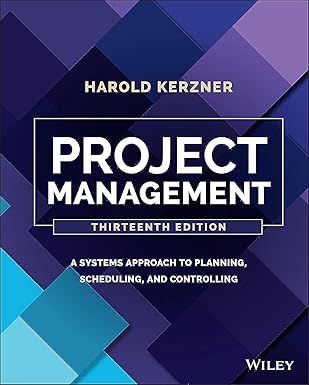
Now WBS has become a key tool in modern project management, helping both individuals and organizations simplify complexity and improve clarity.
WBS Visualization
Here is a visual breakdown of the Work Breakdown Structure (WBS).
It starts from the main project goal and divides the work into phases, then into specific tasks.
Understanding Core Concept
WBS stands for Work Breakdown Structure. It is a visual, hierarchical way of organizing all the work needed to complete a project.
Let’s break it down layer by layer:
Top Level – The Final Deliverable
This is your main goal — for example, launching a new website or building a product.
Mid Levels – Major Components
Break the project into key phases or outputs. For a website, that might be: design, development, content, and testing.
Lowest Level – Work Packages (Tasks)
These are the smallest units of work — things that one person or a small team can handle, like “design homepage wireframe” or “write product descriptions”.
The rule: if a task is too large to estimate time or assign responsibility clearly, break it down further.
The goal: Make sure nothing is missed and everyone knows what to do.
When to Use
- Complex Projects: When a project is too big to visualize mentally (e.g., building a house or launching a software product), WBS is mandatory to avoid missing pieces.
- Cost & Time Estimation: You cannot accurately budget a "Website." You can accurately budget "5 hours of QA testing." WBS allows for bottom-up estimation.
- Preventing Scope Creep: When a client asks for "just one small extra thing," point to the WBS. If it's not in the 100% tree, it is out of scope and requires a new contract.
- Clarifying Roles: When team members are stepping on each other's toes. Assigning specific "Work Packages" to specific owners creates accountability.
Key Takeaway
A well-built WBS doesn’t just organize tasks — it helps organize thinking. It brings structure to complexity, clarity to confusion, and confidence to execution.
Whether you’re managing a big business project or planning a school event, Work Breakdown Structure turns big goals into doable steps — and that’s where success begins.
FAQ
What should a good Work Breakdown Structure (WBS) output look like?
A good result is a realistic diagnosis of the team’s current stage together with a clear view of what leadership should focus on next. The output should help explain what is happening in the team now, not just list the stages in theory.
When is Work Breakdown Structure (WBS) not the right tool?
It becomes less useful when people start treating the stages as a prediction tool or as a label to excuse poor performance. Work Breakdown Structure (WBS) helps interpret team dynamics, but it should not replace direct observation of what the team actually needs next.
Can Work Breakdown Structure (WBS) help with complex projects?
Work Breakdown Structure (WBS) can help with complex projects when the real question is whether the tension reflects a normal stage-of-development issue or a deeper team problem. It helps you read the conflict in context and choose a leadership response that fits the team’s current stage.