Finance Transformation Priority Matrix
Prioritize finance transformation work without burning out your team.
FMEA Methodology
Identify failure modes and prioritize risks.
Work Breakdown Structure (WBS)
For better project planning, helps you simplify, organize, and get things done.
10-10-10 Meeting Model
Structure 30-minute meetings into focused parts for better feedback.
80/20 Rule
Highlights the imbalance between causes and effects
Porter’s Five Forces
Analyze industry competition beyond direct rivals to uncover structural profit drivers.
Outcome-Based Roadmap
Align your team around the right goals, ensure that you’re always working toward meaningful outcomes that matter.
PEST Analysis
Scan political, economic, social, and technological forces to spot macro risks and opportunities early.
PESTEL Analysis
Scan political, economic, social, technological, environmental, and legal forces to reduce strategic blind spots.
Business Model Canvas
Visualize how your business creates, delivers, and captures value on a single page.
SCAMPER Method
Generate new ideas by systematically remixing existing products, processes, and assumptions.
VRIO Framework
Evaluate whether your resources create real, defensible competitive advantage.
Ohmae’s 3C’s Model
Emphasizes the balanced integration of Company, Customer, and Competitor for strategic decisions, avoiding a singular focus.
TOWS Model
Turn SWOT insights into concrete strategic options and actions.
Outcome Discovery Canvas
Define measurable outcomes and success metrics before you commit to building features.
Internal Factor Evaluation (IFE) Matrix
Evaluate internal strengths and weaknesses in strategy.
External Factor Evaluation (EFE) Matrix
Evaluate external opportunities and threats in strategic decision-making.
RACI Model
Bring clarity, reduce friction to the stakeholder communication.
VUCA Framework
A simple guide to describe the complex environment.
BANI Framework
Move away from confusion via recognizing emotional and chaotic forces.
Four-Step Innovation Model
Turn raw ideas into market-ready products through a disciplined, four-stage innovation pipeline.
OODA Loop
To make effective decisions quickly in rapidly changing situations.
STEEP Analysis Framework
Scan external risks and opportunities early using five macro lenses to guide strategy, market entry, and innovation.
FASTR Framework
Filter AI use cases by risk, readiness, and measurable business value before committing real resources.
SWOT Analysis
Evaluate internal strengths and weaknesses against external opportunities and threats to identify real strategic choices.
Work Breakdown Structure (WBS): Turning Big Goals into Doable Steps
For better project planning, helps you simplify, organize, and get things done.
Work Breakdown Structure (WBS)
Why Do Projects Often Go Off Track?
Many teams start projects with excitement and ambition, and finally end up facing missed deadlines, unclear responsibilities, and budget overruns.
Despite some unexpected factors, in some cases, people realize that the work wasn't clearly defined from the beginning.
That’s where the Work Breakdown Structure (WBS) comes in. It much like factorization in math, breaking a project into smaller and smaller components — from overall project goals, to tasks, to daily individual actions — until nothing more can be divided.
WBS was developed by Dr. Harold Kerzner in his classic book “Project Management: A Systems Approach to Planning, Scheduling, and Controlling.”
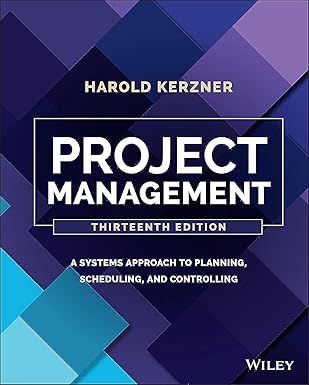
Now WBS has become a key tool in modern project management, helping both individuals and organizations simplify complexity and improve clarity.
WBS Visualization
Here is a visual breakdown of the Work Breakdown Structure (WBS).
It starts from the main project goal and divides the work into phases, then into specific tasks.
Understanding Core Concept
WBS stands for Work Breakdown Structure. It is a visual, hierarchical way of organizing all the work needed to complete a project.
Let’s break it down layer by layer:
Top Level – The Final Deliverable
This is your main goal — for example, launching a new website or building a product.
Mid Levels – Major Components
Break the project into key phases or outputs. For a website, that might be: design, development, content, and testing.
Lowest Level – Work Packages (Tasks)
These are the smallest units of work — things that one person or a small team can handle, like “design homepage wireframe” or “write product descriptions”.
The rule: if a task is too large to estimate time or assign responsibility clearly, break it down further.
The goal: Make sure nothing is missed and everyone knows what to do.