Work Breakdown Structure (WBS)
For better project planning, helps you simplify, organize, and get things done.
8+8+8 Rule
Make a good balance sheet of your life.
2 Minute Rule
Change up the content every two minutes to keep people engaged.
Four Quarters Method
Helps you stay productive, maintain focus, and manage your energy across the entire day.
80/20 Rule
Highlights the imbalance between causes and effects
Mental Flow
A state of complete immersion and focused enjoyment in an activity.
Outcome-Based Roadmap
Align your team around the right goals, ensure that you’re always working toward meaningful outcomes that matter.
5 Second Rule
A Simple Trick to overcome procrastination and anxiety.
Pomodoro Technique
An easy time management method that boost your focus and productivity.
RACI Model
Bring clarity, reduce friction to the stakeholder communication.
VITALS Method
Just take one small, meaningful step instead of a giant leap.
151515 Career Planning Model
Guiding you through three 15-year stages for your 45-year career.
Ivy Lee Method
Replace scattered planning with deliberate action.
Peak–Trough–Recovery Model
Knowing where you are helps you choose what to do next with intention instead of habit.
ISD Model
Creates a closed loop that ensures learning outcomes align with business objectives
Work Breakdown Structure (WBS): Turning Big Goals into Doable Steps
For better project planning, helps you simplify, organize, and get things done.
Work Breakdown Structure (WBS)
Why Do Projects Often Go Off Track?
Many teams start projects with excitement and ambition, and finally end up facing missed deadlines, unclear responsibilities, and budget overruns.
Despite some unexpected factors, in some cases, people realize that the work wasn't clearly defined from the beginning.
That’s where the Work Breakdown Structure (WBS) comes in. It much like factorization in math, breaking a project into smaller and smaller components — from overall project goals, to tasks, to daily individual actions — until nothing more can be divided.
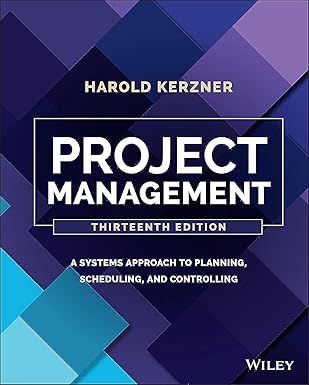
WBS was developed by Dr. Harold Kerzner in his classic book “Project Management: A Systems Approach to Planning, Scheduling, and Controlling.”
Now WBS has become a key tool in modern project management, helping both individuals and organizations simplify complexity and improve clarity.
WBS Visualization
Here is a visual breakdown of the Work Breakdown Structure (WBS).
It starts from the main project goal and divides the work into phases, then into specific tasks.
Understanding Core Concept
WBS stands for Work Breakdown Structure. It is a visual, hierarchical way of organizing all the work needed to complete a project.
Let’s break it down layer by layer:
Top Level – The Final Deliverable
This is your main goal — for example, launching a new website or building a product.
Mid Levels – Major Components
Break the project into key phases or outputs. For a website, that might be: design, development, content, and testing.
Lowest Level – Work Packages (Tasks)
These are the smallest units of work — things that one person or a small team can handle, like “design homepage wireframe” or “write product descriptions”.
The rule: if a task is too large to estimate time or assign responsibility clearly, break it down further.
The goal: Make sure nothing is missed and everyone knows what to do.